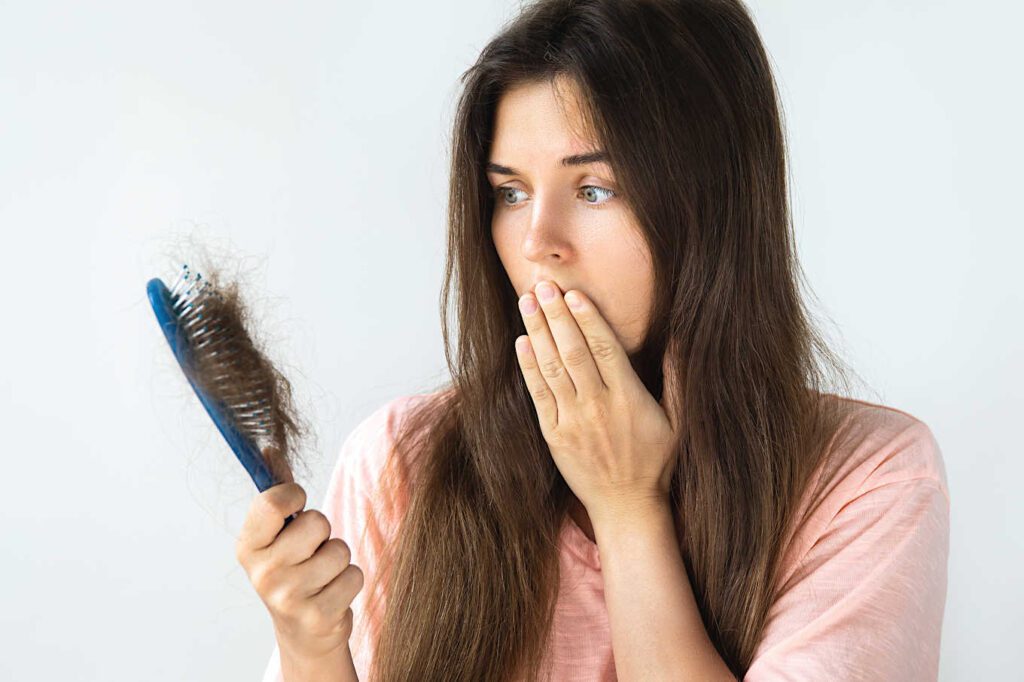
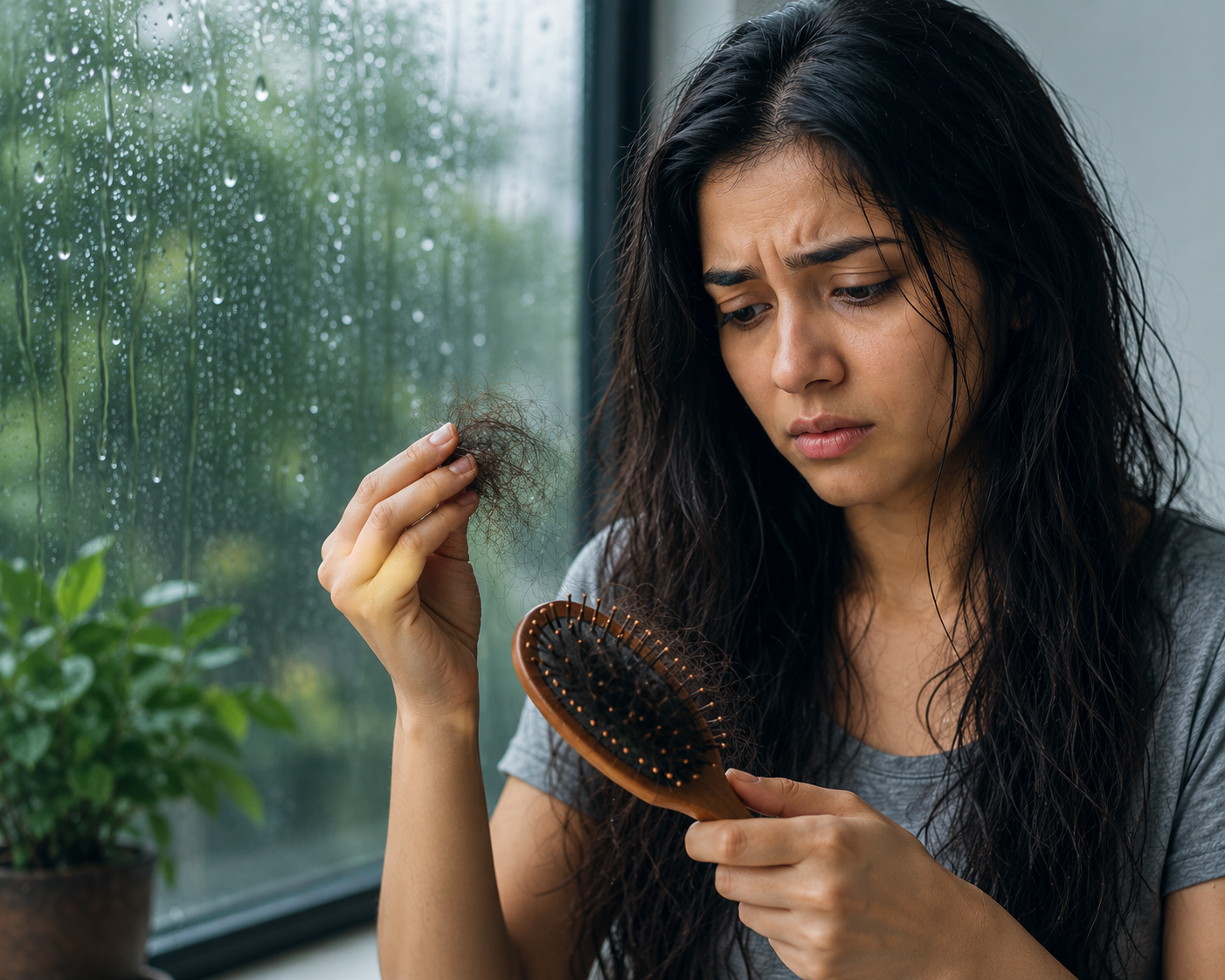
Why hair fall increases during monsoon is one of the most common questions dermatologists and hair experts receive during the rainy season. Increased humidity, sweat, scalp infections, and fungal growth can all contribute to seasonal hair fall.
Seasonal hair fall is one of the most common concerns during the rainy season. The combination of humidity, sweat, fungal growth, pollution, and poor scalp hygiene can weaken your hair roots and affect overall scalp health.
The good news? With the right scalp care routine and healthy hair habits, you can significantly reduce monsoon hair fall.
In this guide, we’ll explain why hair fall increases during monsoon, the hidden causes, prevention tips, and when it’s time to seek professional help.
Why Does Hair Fall Increase During Monsoon?
During the rainy season, humidity levels rise significantly. Excess moisture in the air makes your scalp sweat more, creating an ideal environment for bacteria and fungi to grow.
A disturbed scalp environment affects hair follicles, making hair weak, dull, and more prone to falling.
While losing 50–100 hairs daily is considered normal, noticing noticeably more hair on your pillow, comb, or shower drain during monsoon may indicate seasonal hair shedding or an underlying scalp issue.
7 Hidden Reasons Why Hair Fall Increases During Monsoon
1. How to Prevent Hair Fall During Monsoon
Humidity causes the hair shaft to absorb excess moisture, making it swell and become fragile.
This often leads to:
- Hair breakage
- Frizz
- Split ends
- Weak hair strands
People with curly, dry, or chemically treated hair are especially affected.
2. Excess Sweat Makes the Scalp Oily
During monsoon, sweat mixes with natural scalp oil (sebum), leading to:
- Greasy scalp
- Clogged follicles
- Sticky hair
- Dirt accumulation
When follicles remain blocked for long periods, healthy hair growth may be affected.
3. Best Monsoon Hair Care Routine
Warm and damp conditions are ideal for fungal growth.
Common symptoms include:
- Scalp itching
- White flakes
- Redness
- Bad scalp odor
- Persistent irritation
If left untreated, fungal infections can weaken hair roots and contribute to increased hair fall.
4. Dandruff Gets Worse During Rainy Season
Many people experience seasonal dandruff during monsoon.
Dandruff causes:
- Scalp inflammation
- Continuous itching
- Weak hair roots
- Increased hair shedding
Managing dandruff early can help maintain a healthier scalp.
5. Rainwater and Pollution
Rainwater itself isn’t always harmful, but in polluted areas it may carry dust, pollutants, and contaminants that can irritate the scalp.
If rainwater remains on your scalp for hours, it can worsen scalp problems.
Whenever possible, wash your hair with clean water after getting drenched in the rain.
6. Nutritional Deficiency
Many people eat less nutritious food during monsoon, reducing intake of protein, iron, zinc, biotin, and essential vitamins.
Since hair is primarily made of protein, poor nutrition can affect hair strength and growth.
7. Poor Scalp Hygiene
Skipping hair washes because of frequent rain or fear of hair fall can actually make scalp conditions worse.
A dirty scalp allows oil, sweat, pollution, and dead skin cells to build up, affecting overall scalp health.
Keeping the scalp clean is essential for maintaining healthy hair.
Signs Your Hair Fall Needs Attention
Seasonal hair fall is common, but consult a hair expert if you notice:
- Hair fall lasting more than 8–12 weeks
- Visible thinning
- Widening hair part
- Receding hairline
- Bald patches
- Severe itching or redness
- Painful scalp
- Excessive dandruff
These signs may indicate an underlying scalp or hair condition.
Monsoon Hair Care Tips to Reduce Hair Fall
Wash Your Hair Regularly
Use a gentle shampoo suited to your scalp type to remove sweat, dirt, and excess oil.
Keep Your Scalp Dry
Avoid tying wet hair.
Always dry your scalp completely after washing or getting caught in the rain.
Eat a Protein-Rich Diet
Include:
- Lentils
- Paneer
- Soy products
- Nuts
- Seeds
- Green leafy vegetables
- Seasonal fruits
Proper nutrition supports stronger hair.
Avoid Excessive Heat Styling
Frequent use of straighteners and curling irons can increase hair breakage during humid weather.
Massage Your Scalp Gently
A gentle scalp massage may improve circulation and help distribute natural oils evenly.
Avoid aggressive rubbing that can damage hair roots.
Stay Hydrated
Hydration supports overall scalp and hair health.
Drink enough water throughout the day.
Get a Professional Scalp Analysis
If your hair fall continues despite good care, a scalp analysis can help identify issues such as dandruff, fungal buildup, scalp inflammation, or nutritional deficiencies.
Early diagnosis often leads to more effective management.
Common Hair Care Mistakes During Monsoon
Many people unknowingly make mistakes that can worsen seasonal hair concerns:
- Sleeping with wet hair
- Sharing combs or towels
- Oiling an already oily scalp excessively
- Ignoring dandruff
- Washing hair with very hot water
- Using harsh chemical products without professional advice
Avoiding these habits can help keep your scalp healthier during the rainy season.
FAQs About Hair Fall During Monsoon
Why does hair fall increase during monsoon?
Higher humidity, excess sweat, fungal growth, dandruff, and scalp oil buildup can all contribute to increased seasonal hair shedding.
Is monsoon hair fall normal?
Yes. Mild seasonal hair fall is common. However, excessive shedding, visible thinning, or bald patches should be evaluated by a hair specialist.
Can rainwater cause hair fall?
Rainwater itself is not usually the direct cause. The combination of pollution, prolonged moisture, and poor scalp hygiene may increase scalp irritation and contribute to hair problems.
How can I reduce hair fall during monsoon?
Maintain a clean scalp, eat a balanced diet, avoid sleeping with wet hair, stay hydrated, and address dandruff or scalp infections promptly.
Does humidity damage hair?
High humidity can make hair frizzy, weak, and more prone to breakage, especially if it is already dry or chemically treated.
Final Thoughts
Monsoon hair fall is often temporary, but it shouldn’t be ignored if it becomes excessive or is accompanied by scalp discomfort.
Healthy hair starts with a healthy scalp. By maintaining proper scalp hygiene, eating a nutrient-rich diet, and following a consistent hair care routine, you can minimize seasonal hair fall and keep your hair stronger throughout the rainy season.
If your hair fall persists or your scalp shows signs of infection or inflammation, consider a professional scalp evaluation to identify the underlying cause and receive personalized guidance.